

Artificial Intelligence (AI) is everywhere these days. It’s the technology behind the voice assistants on your phone, the recommendations on your streaming service, and even the systems that decide what ads you see online. AI promises to make life easier, safer, and more efficient, with applications ranging from self-driving cars to medical diagnostics. But for all its benefits, AI has a darker side that’s often overlooked in the excitement. For the average person, it’s important to understand the risks AI brings—things like job losses, invasions of privacy, unfair biases, ethical dilemmas, and the potential for misuse. This article dives into these negative aspects in a way that’s easy to follow, shedding light on why we should approach AI with caution.
Job Displacement: When Machines Replace People
One of the biggest worries about AI is its impact on jobs. Picture a factory worker who’s spent years mastering their role, only to find their tasks handed over to a machine that works faster and cheaper. AI-powered automation is already transforming industries like manufacturing, retail, and even white-collar sectors like accounting and customer service. For example, warehouses now use robots to sort and pack goods, while software can handle tasks like data entry or basic legal research. A 2017 study by McKinsey estimated that up to 30% of current jobs could be automated by 2030, affecting millions of workers worldwide.
This shift hits hardest for those in repetitive or routine jobs. Truck drivers, for instance, face a future where self-driving vehicles could take over. While new jobs may emerge in tech or AI maintenance, they often require skills that displaced workers don’t have. Retraining is possible, but it’s not always accessible or affordable, especially for older workers or those in rural areas. The result? Unemployment, financial stress, and a sense of being left behind. Communities dependent on certain industries—like manufacturing towns—could face economic decline, with ripple effects on local businesses and families. It’s not just about losing jobs; it’s about losing livelihoods and stability.
Privacy: Your Data, Their Power
AI thrives on data—lots of it. Every time you search online, post on social media, or use a smart device, you’re feeding AI systems information about your habits, preferences, and even your location. Companies use this data to train AI models, which then predict your behavior to sell you products or influence your choices. Sounds convenient, right? But there’s a catch: you often don’t know how much of your personal life is being collected or who’s using it.
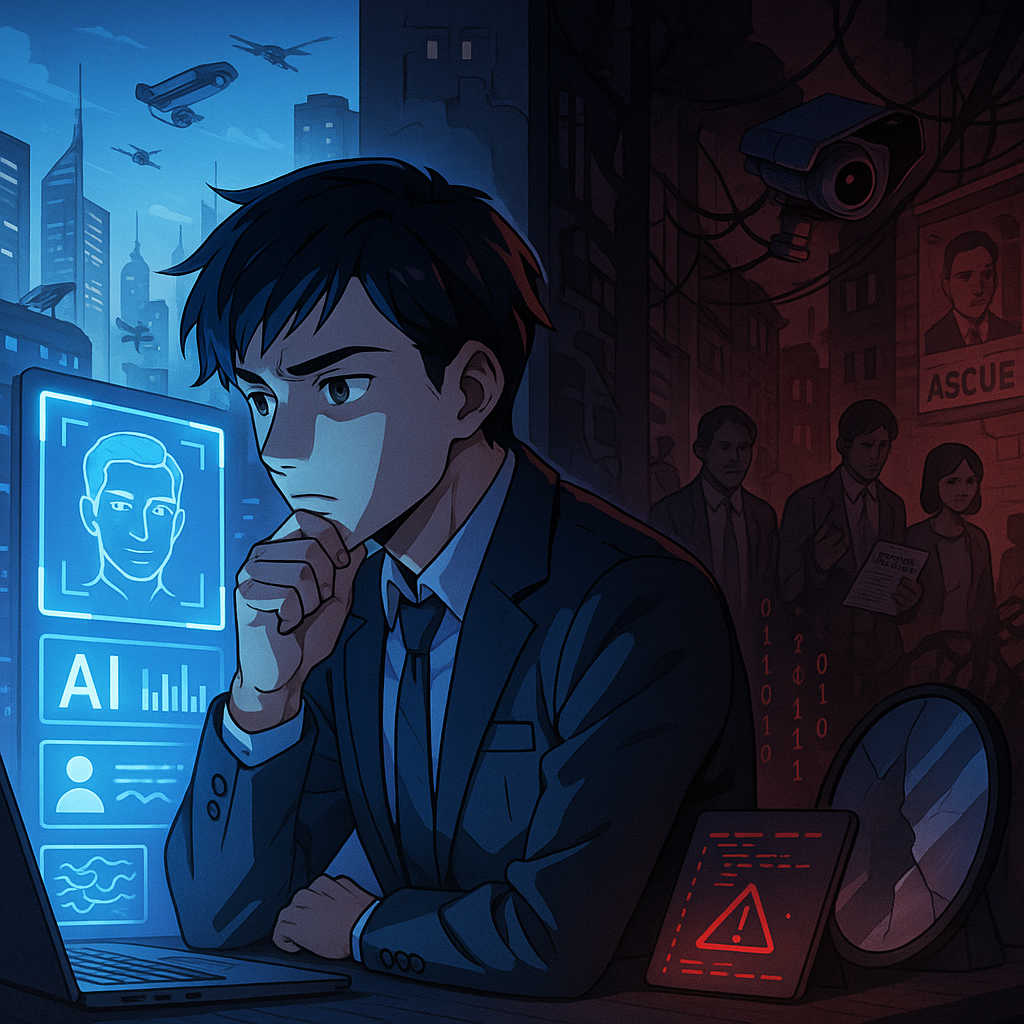
Take facial recognition technology. It’s used in everything from unlocking your phone to security cameras in public spaces. But what happens when that data is stored, shared, or hacked? In 2019, a data breach exposed the personal information of over a billion people in India’s Aadhaar system, which uses AI-driven biometrics. Such incidents show how AI can amplify privacy risks. Governments and corporations can track your movements, purchases, and even political views, often without your consent. In countries with less oversight, this data can be used to monitor citizens or suppress dissent. Even in democracies, the lack of clear regulations leaves you vulnerable to exploitation, with little control over your own information.
Bias and Discrimination: AI’s Hidden Prejudices
AI is only as fair as the data it’s trained on, and humans are far from perfect. If the data fed into AI systems reflects existing biases—say, favoring certain groups in hiring or policing—it can perpetuate discrimination. For example, in 2018, Amazon scrapped an AI tool for hiring after it was found to penalize resumes with words like “women’s” because it was trained on male-dominated hiring patterns. Similarly, facial recognition systems have been shown to misidentify people with darker skin tones at higher rates, leading to wrongful arrests in some cases.
These biases aren’t just technical glitches; they can ruin lives. Imagine being denied a job or loan because an AI algorithm flagged you as “risky” based on biased data. Or consider predictive policing tools that target minority neighborhoods because historical crime data reflects systemic inequities. The kicker? AI’s decisions often feel like objective truth because they come from a machine, making it harder to challenge them. Without transparency or diverse teams building these systems, AI can deepen social inequalities, affecting everything from job opportunities to criminal justice.
Ethical Dilemmas: Who’s Responsible?
AI raises tough ethical questions that don’t have easy answers. Take autonomous vehicles: if a self-driving car has to choose between hitting a pedestrian or swerving and risking its passengers, who decides what’s right? Programmers? Companies? Nobody’s fully figured this out yet. Or consider AI in healthcare, where algorithms might prioritize certain patients for treatment based on data that undervalues marginalized groups. These aren’t just hypothetical scenarios—they’re real challenges as AI takes on more decision-making roles.
Another ethical issue is accountability. If an AI system makes a mistake—like misdiagnosing a patient or causing a financial loss—who’s to blame? The developer, the company, or the AI itself? Unlike humans, AI doesn’t have a conscience or legal responsibility, which leaves a gray area when things go wrong. There’s also the question of AI in warfare. Autonomous drones or weapons could make life-or-death decisions faster than humans, but they lack moral judgment. The idea of machines deciding who lives or dies feels like something out of a sci-fi movie, but it’s already being tested in military programs worldwide.
Misuse: AI in the Wrong Hands
AI’s power can be a double-edged sword. In the wrong hands, it can be weaponized to cause harm. Deepfakes—AI-generated videos that make people appear to say or do things they didn’t—are a growing problem. In 2023, a deepfake video of a public figure spread false information, sparking panic before it was debunked. Such technology can fuel misinformation, fraud, or even blackmail. Scammers also use AI to create convincing phishing emails or voice-cloning scams, tricking people into sharing money or sensitive information.
Governments and organizations can misuse AI too. Authoritarian regimes have used AI-driven surveillance to track dissidents or enforce social control, like China’s social credit system, which monitors citizens’ behavior and assigns scores that affect their access to services. Even in democracies, AI can be used to manipulate elections through targeted ads or fake news, as seen in controversies around the 2016 U.S. election. The accessibility of AI tools means almost anyone with enough skill can exploit them, from cybercriminals to political operatives, making regulation a constant game of catch-up.
The Mental and Social Toll
AI doesn’t just affect jobs or privacy—it can change how we think and connect. Constant exposure to AI-curated content, like social media feeds, can trap you in echo chambers, reinforcing your beliefs and polarizing society. Studies, like one from MIT in 2020, show that AI algorithms often amplify divisive or misleading content because it gets more clicks. This can erode trust in institutions and deepen social divides.
There’s also a psychological cost. Relying on AI for decisions—whether it’s navigation apps or health trackers—can make us feel less capable or independent. Over time, this “automation bias” might dull critical thinking skills. For kids growing up with AI tutors or companions, there’s a risk of reduced human interaction, which could affect emotional development. And let’s not ignore the anxiety of living in a world where machines seem to outsmart us, leaving some feeling obsolete or powerless.
Environmental Costs: The Hidden Footprint
Building and running AI isn’t cheap for the planet. Training large AI models, like those powering chatbots or image generators, requires massive computing power. Data centers consume enormous amounts of electricity, often powered by fossil fuels. A 2019 study estimated that training a single AI model can emit as much carbon as five cars over their lifetimes. As AI use grows, so does its environmental footprint, contributing to climate change at a time when sustainability is critical. For the average person, this means higher energy costs and a warmer planet, even if the connection to AI isn’t always obvious.
The Path Forward: Navigating AI’s Risks
So, what can we do about these downsides? Awareness is the first step. Understanding that AI isn’t a neutral tool but a product of human choices helps us demand better. Governments need stronger regulations—like data privacy laws or bias audits—to hold companies accountable. Individuals can take small steps too: limit data sharing, support ethical AI development, and push for transparency in how AI is used. Education is key, not just for tech experts but for everyone, to understand AI’s impact and advocate for fair policies.
Workers facing job displacement need support, like affordable retraining programs or universal basic income experiments, to ease the transition. On privacy, using tools like encrypted messaging or opting out of unnecessary data collection can help. Addressing bias means diversifying AI development teams and testing systems rigorously before they’re deployed. Ethically, we need open debates about AI’s role in sensitive areas like healthcare or warfare. And to curb misuse, laws must catch up to technology, banning harmful applications like deepfakes in certain contexts.
AI isn’t going away, and it shouldn’t. It has the potential to solve big problems, from curing diseases to improving education. But ignoring its negative side risks a future where we’re controlled by technology rather than controlling it. By staying informed and engaged, we can shape AI to serve humanity without Ascension, not harm it. The journey won’t be easy, but it starts with understanding the challenges and demanding accountability.