

- What is Artificial Intelligence (AI)?
Artificial Intelligence, or AI, is when computers or machines are designed to think and act like humans. It means teaching machines to do tasks that usually require human intelligence, such as learning from experience, solving problems, understanding language, or recognizing images.
For example:
- Voice Assistants: When you talk to Siri or Google Assistant on your phone and ask for the weather, it understands your question and gives you an answer. That’s AI at work!
- Recommendation Systems: When you watch videos on YouTube or shop on an online store like Daraz, AI suggests videos or products you might like based on what you’ve watched or bought before.
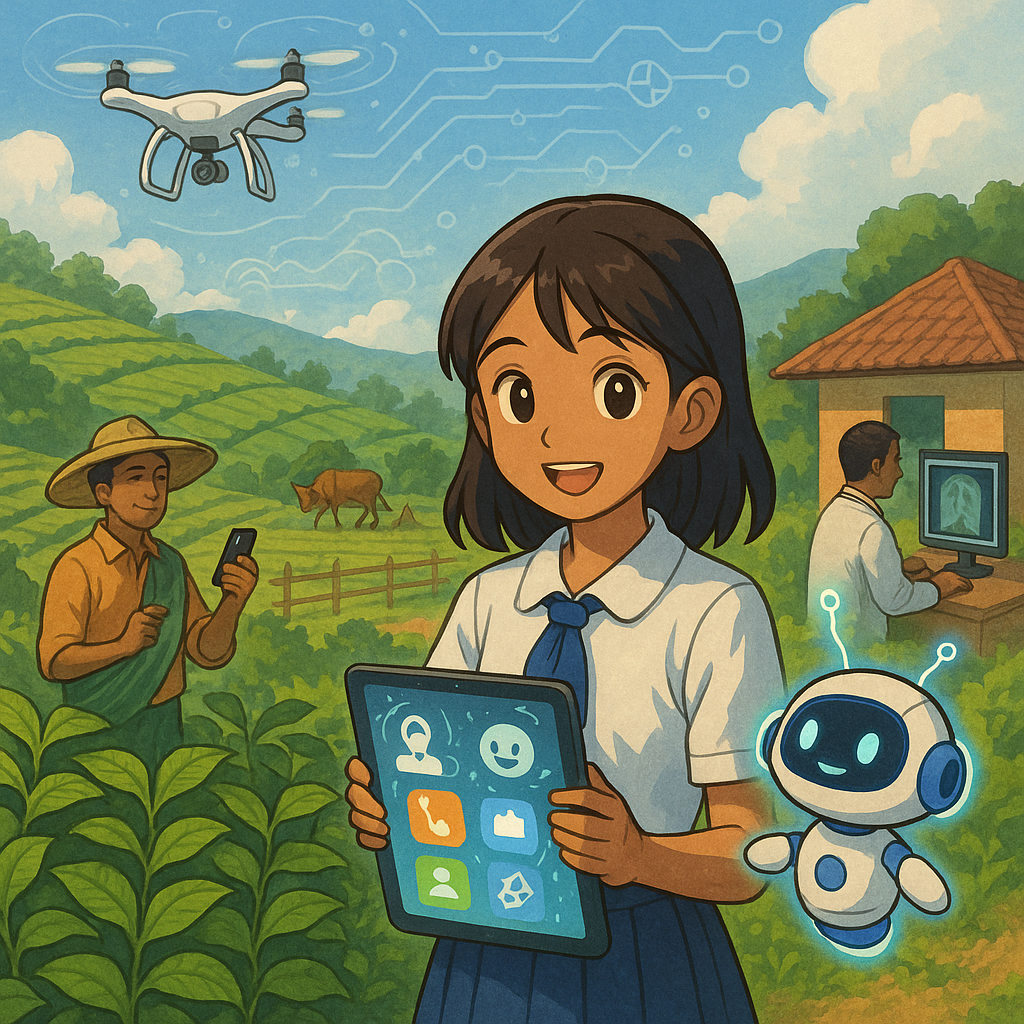
- Farming in Sri Lanka: Some farmers use AI tools to analyze weather patterns and soil conditions to decide the best time to plant crops, helping them grow more food efficiently.
In simple terms, AI is like a smart helper that learns and makes decisions to make our lives easier!
- Where do we already see AI in daily life?
AI is already part of many things we use every day, often without us even noticing! It helps make our lives easier, faster, and more convenient. Here are some common examples:
- Online Shopping: Websites like Daraz or Amazon use AI to recommend products you might like, such as clothes or gadgets, based on what you’ve looked at or bought before.
- Social Media and Streaming: On Instagram or TikTok, AI shows you posts or videos it thinks you’ll enjoy. Similarly, Netflix or YouTube suggests movies or songs based on what you’ve watched.
- Navigation Apps: Apps like Google Maps use AI to find the fastest route to your destination, avoiding traffic jams, which is especially helpful in busy areas like Colombo.
- Banking and Security: Banks in Sri Lanka use AI to detect fraud. For example, if someone tries to use your credit card for a strange purchase, AI can spot it and alert the bank.
AI is like an invisible helper in these tools, working behind the scenes to make our daily tasks smoother and smarter!
- What is the difference between AI, machine learning, and deep learning?
Artificial Intelligence (AI), Machine Learning (ML), and Deep Learning (DL) are related but different concepts. Think of them as layers, with each one being a part of the bigger picture. Here’s a simple explanation:
- Artificial Intelligence (AI): AI is the broad idea of making machines think and act like humans. It includes any technology that allows computers to do tasks that usually require human intelligence, like understanding language or recognizing objects.
- Example: A chatbot on a Sri Lankan online store that answers your questions about delivery is using AI.
- Machine Learning (ML): ML is a part of AI. It’s a method where computers learn from data to make decisions or predictions without being explicitly programmed for every step. In ML, the computer improves over time as it sees more data.
- Example: When a weather app in Sri Lanka predicts rain based on past weather patterns, it’s using ML to analyze data and make a forecast.
- Deep Learning (DL): DL is a special type of ML that uses complex systems called neural networks, which are inspired by the human brain. DL is great for handling large amounts of data, like images or videos, and is used for more advanced tasks.
- Example: An app that identifies plant diseases by analyzing photos of leaves (helpful for Sri Lankan farmers growing tea or rice) uses DL to recognize patterns in the images.
In short: AI is the big idea of smart machines. ML is one way AI learns from data. DL is an advanced type of ML that handles complex tasks like image or voice recognition. They all work together to make technology smarter!
- Can AI think like a human?
No, AI cannot think like a human in the way we do. AI is designed to perform specific tasks by processing data and following instructions, but it doesn’t have feelings, creativity, or consciousness like humans. It mimics certain human abilities, such as solving problems or understanding language, but it’s more like a very smart tool than a human brain.
For example:
- Chatbots: A chatbot on a Sri Lankan bank’s website can answer questions like “What’s my account balance?” by analyzing data. It seems smart, but it’s just following programmed rules and patterns, not thinking or feeling.
- Image Recognition: AI can identify objects in photos, like recognizing a coconut tree in a picture. But it doesn’t “understand” what a tree is or feel anything about it—it just matches patterns based on data it was trained on.
- Games: AI can play games like chess and beat human players by calculating moves, but it doesn’t enjoy the game or think strategically like a person—it’s just crunching numbers.
In short, AI is great at doing specific tasks and can seem human-like, but it doesn’t have thoughts, emotions, or self-awareness. It’s like a super-smart calculator that helps us with work, not a human mind!
- How do computers ‘learn’ with AI?
Computers ‘learn’ with AI through a process called machine learning, where they analyze data, find patterns, and improve their performance over time without being explicitly programmed for every step. Think of it like teaching a child to recognize animals by showing them pictures—except computers use data and math instead of human guidance.
Here’s how it works in simple terms:
- Data Input: The computer is given a lot of examples (data), like pictures, text, or numbers.
- Training: The computer looks for patterns in the data using algorithms (special math rules). For example, it might notice that pictures of cats often have pointy ears and whiskers.
- Practice and Improvement: The computer tests itself and adjusts its rules to get better at recognizing patterns or making predictions. The more data it sees, the smarter it gets.
- Use: Once trained, the computer can use what it learned to do tasks, like identifying new pictures or predicting something.
Examples:
- Spam Email Filters: Your email app learns to spot spam by looking at examples of spam and non-spam emails. Over time, it gets better at filtering out unwanted messages.
- Farming Apps in Sri Lanka: Some apps use AI to analyze weather and soil data. By studying past data, the computer learns to predict the best time to plant crops like rice or tea.
- Voice Recognition: When you talk to a voice assistant like Google Assistant, it learns to understand your accent better over time by analyzing your voice patterns.
In short, computers ‘learn’ by finding patterns in data and practicing with lots of examples. It’s not learning like humans, but it helps them do tasks smarter and faster!
- Is AI always right or neutral?
No, AI is not always right or neutral. AI is a tool created and trained by humans, so it can make mistakes or reflect biases depending on how it’s designed or the data it’s trained on. While AI can be very accurate for specific tasks, it’s not perfect and can sometimes produce errors or unfair results.
Here’s why:
- Mistakes: AI relies on data and algorithms. If the data is incomplete or the algorithm isn’t perfect, AI can get things wrong.
- Example: A weather app in Sri Lanka might predict sunny weather using AI, but if it misses new data about a sudden storm, its prediction will be wrong.
- Bias: AI learns from the data it’s given. If the data contains human biases (like favoring certain groups), the AI might make unfair decisions.
- Example: If an AI hiring tool is trained on data from a company that mostly hired men, it might unfairly reject female applicants, even if they’re qualified.
- Not Neutral: AI doesn’t have its own sense of fairness or morality. It reflects the choices of the people who build and train it.
- Example: A photo-editing app might lighten skin tones in pictures because it was trained on data that favored lighter skin, which could offend or misrepresent people in Sri Lanka.
- Can AI take away jobs?
Yes, AI can take away some jobs, but it can also create new ones and change how we work. AI is good at automating repetitive or data-heavy tasks, which means it might replace certain roles. However, it also opens up opportunities for new kinds of jobs and can help people work more efficiently.
Here’s a closer look:
- Jobs AI Might Replace: AI can do tasks like data entry, basic customer service, or simple calculations faster than humans. This could reduce the need for some jobs.
- Example: In Sri Lanka, AI-powered chatbots on bank websites can answer common questions like “How do I check my balance?” This might mean fewer jobs for call center staff handling simple queries.
- Jobs AI Can Create: AI creates demand for new roles, like developing, maintaining, or training AI systems. It also supports jobs that require creativity, empathy, or complex decision-making, which AI can’t do well.
- Example: In Sri Lanka’s tea industry, AI might analyze soil data to improve farming, creating jobs for people to manage these AI tools or train farmers on how to use them.
- Jobs AI Can Change: AI can make jobs easier by taking over repetitive tasks, letting workers focus on more meaningful work.
- Example: In a Sri Lankan garment factory, AI could handle quality checks on clothes, allowing workers to focus on designing or managing production instead of inspecting every piece.
In short, while AI might replace some jobs, it also creates new opportunities and improves how we work. To stay ahead, people can learn skills like using AI tools or working in creative and human-focused roles that AI can’t easily replace!
- Is AI being used in Sri Lanka?
Yes, AI is being used in Sri Lanka across various sectors to improve efficiency, solve problems, and support development. While it’s still growing, AI is making a noticeable impact in areas like education, agriculture, healthcare, and more, tailored to local needs.
Here are some examples:
- Education: The Sri Lankan government has launched programs to introduce AI in schools. For instance, ‘Artificial Intelligence Student Societies’ have been set up in 100 schools to teach students in grades 6 to 9 about AI, helping them prepare for future careers.
- Agriculture: AI is helping farmers improve crop yields. Companies like Cinnamon AI use AI-powered drones to monitor crop health and suggest the best times for irrigation or fertilization, which is useful for tea and rice farmers.
- Healthcare: Some hospitals, like Lanka Hospitals, use AI to analyze medical images such as X-rays, helping doctors detect health issues faster and more accurately.
- Public Services: The 1990 Suwa Sariya ambulance service uses AI and mixed reality to improve emergency response, making it faster and more efficient.
- Wildlife Protection: The Faculty of Engineering at Peradeniya University developed an AI-powered device to prevent train-elephant collisions, protecting both wildlife and train passengers.
In short, AI is being used in Sri Lanka to address local challenges and improve lives, from farms to hospitals to schools. It’s a growing field, and with government support, we’ll likely see even more AI solutions in the future!
- What are the risks or dangers of AI?
While AI can be very helpful, it also comes with risks and dangers if not used carefully. These risks can affect individuals, businesses, and society. Understanding them helps us use AI responsibly.
Here are some key risks with examples:
- Bias and Unfairness: AI learns from data, and if the data contains biases, AI can make unfair decisions.
- Example: If an AI hiring tool in Sri Lanka is trained on data from companies that favored certain groups, it might unfairly reject qualified job applicants from other communities.
- Job Losses: AI can automate tasks, which might reduce the need for some jobs.
- Example: In a Sri Lankan call center, AI chatbots answering customer queries could replace some customer service roles, leaving workers jobless.
- Privacy Concerns: AI often uses personal data, and if not protected, this data could be misused.
- Example: An AI app collecting your shopping habits from a Sri Lankan online store like Daraz could share your data without permission, risking your privacy.
- Errors and Mistakes: AI isn’t perfect and can make wrong predictions or decisions, especially with incomplete data.
- Example: An AI weather app might predict clear skies for a tea plantation, but if it misses new storm data, farmers could lose crops by not preparing.
- Misuse of AI: AI can be used for harmful purposes, like spreading false information or creating fake content.
- Example: AI-generated fake videos (deepfakes) could spread misinformation during elections in Sri Lanka, confusing voters.
In short, AI has great potential, but it can cause problems like unfairness, job losses, privacy issues, errors, or misuse if not managed properly. By creating fair rules and using AI ethically, we can reduce these risks and make it a force for good!
- Who controls or governs AI?
AI is controlled and governed by a combination of people, organizations, and governments, but there isn’t one single authority in charge worldwide. Instead, it’s a mix of companies that build AI, governments that make laws, and international groups that set guidelines to ensure AI is used safely and fairly.
Here’s a simple breakdown:
- Companies and Developers: The people and companies creating AI (like Google, Microsoft, or local Sri Lankan tech firms) decide how their AI systems work. They design the rules and train AI with data.
- Example: A Sri Lankan company like Cinnamon AI, which uses AI for agriculture, controls how its drones analyze crop data to help farmers.
- Governments: Governments create laws and regulations to ensure AI is used responsibly. In Sri Lanka, the government is working on policies to promote safe AI use.
- Example: The Sri Lankan government might pass rules to protect people’s privacy when AI apps collect data from online shopping platforms like Daraz.
- International Organizations: Groups like the United Nations or global tech standards bodies suggest guidelines for AI to ensure it’s ethical and doesn’t harm people.
- Example: UNESCO has guidelines for AI ethics, which could influence how Sri Lankan schools teach AI to students.
- Users and Society: People using AI, like consumers or businesses, also influence how AI is developed by demanding fair and safe systems.
- Example: If Sri Lankan customers complain about biased AI in a job application tool, the company might change it to be fairer.
In short, no single person or group fully controls AI. It’s a shared responsibility among companies, governments, global organizations, and even users to ensure AI is developed and used in a way that benefits everyone while minimizing risks!
- Can AI be creative or emotional?
No, AI cannot truly be creative or emotional like humans. AI can mimic creativity and seem to respond emotionally, but it doesn’t have feelings, imagination, or personal experiences. It uses data and algorithms to produce results that might look creative or emotional, but it’s all based on patterns and programming.
Here’s a closer look:
- Creativity: AI can generate things like art, music, or stories by analyzing patterns in data it was trained on. However, it’s not inventing something new from personal inspiration—it’s combining existing ideas in clever ways.
- Example: An AI tool might create a painting that looks like a traditional Sri Lankan Kandyan artwork by studying thousands of similar images. But it’s not “inspired” like a human artist; it’s just following patterns.
- Emotions: AI can seem emotional by using language that sounds happy, sad, or empathetic, but it doesn’t actually feel anything. It’s programmed to respond in ways that seem human-like.
- Example: A chatbot on a Sri Lankan mental health app might say, “I’m here for you” when you share a problem. It sounds caring, but the AI doesn’t understand or feel your emotions—it’s just using pre-programmed responses.
In short, AI can produce results that look creative or sound emotional, but it’s not truly creative or capable of feelings. It’s like a very smart tool that copies human behavior based on data, not a being with a heart or imagination!
- What does the future with AI look like for Sri Lanka?
The future with AI in Sri Lanka looks promising, with the potential to improve many aspects of life, from education and farming to healthcare and the economy. As AI technology grows and the country invests in it, Sri Lankans can expect smarter tools to solve local challenges, create jobs, and make life more convenient. However, it will also require careful planning to ensure everyone benefits fairly.
Here’s what the future might hold, with examples:
- Improved Agriculture: AI could help farmers grow more crops like rice, tea, and coconuts by predicting weather, analyzing soil, and detecting pests early.
- Example: In the future, AI-powered apps could tell a tea farmer in Nuwara Eliya exactly when to fertilize their plants, increasing yields and income.
- Better Healthcare: AI could make healthcare more accessible, especially in rural areas, by helping doctors diagnose diseases or manage patient records efficiently.
- Example: AI tools might analyze medical scans in a village clinic in Anuradhapura, helping doctors detect illnesses like diabetes faster, even with limited resources.
- Smarter Education: AI could personalize learning for students, offering lessons tailored to their needs, and help train teachers to use new technology.
- Example: A student in Galle could use an AI app to practice math at their own pace, with the app suggesting exercises based on their progress.
- Economic Growth and Jobs: AI could boost industries like tourism and IT, creating new jobs in AI development, data analysis, and tech support.
- Example: AI chatbots could guide tourists visiting Sigiriya, while young Sri Lankans find jobs building and maintaining these systems.
- Environmental Protection: AI could help protect Sri Lanka’s wildlife and natural resources by monitoring forests or preventing human-elephant conflicts.
- Example: AI-powered cameras in Yala National Park could track animal movements, helping rangers prevent poaching.
Challenges to Address: For AI to benefit everyone, Sri Lanka will need to train people in AI skills, ensure internet access in rural areas, and create laws to protect privacy and prevent misuse. Without these, some people might miss out on AI’s benefits.
In short, the future with AI in Sri Lanka could bring smarter farming, better healthcare, improved education, and new job opportunities. With the right steps, AI can help build a brighter, more connected future for all Sri Lankans!